
Replacing a water heater in Langley? Our plumbers can help you choose the right system.
Understanding the Difference Between Tankless and Traditional Water Heaters
When a tankless water heater starts coming up in conversation, it usually means your existing hot water tankis nearing the end of its life. Many homeowners across Langley and the Fraser Valley face the same decision: replace the aging tank with another one, or upgrade to a tankless system. There is no universal answer because the right choice depends on your home, budget, and hot water usage. Real Deal Plumbing installs both systems throughout BC and helps homeowners understand the real differences in cost, efficiency, and long-term value.
This guide explains how each system works, what installation typically involves, and which option makes the most sense for Fraser Valley homes.
How Each System Works
How a Traditional Tank Water Heater Works
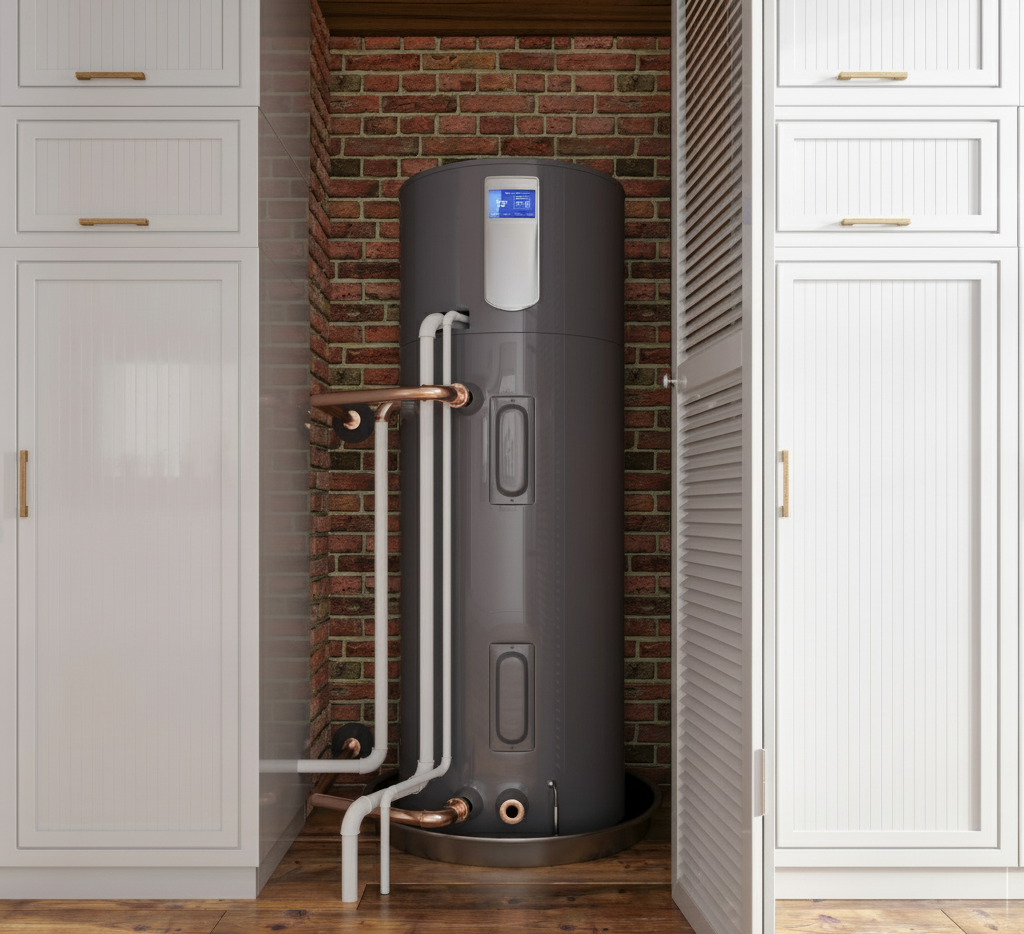
A traditional tank water heater stores heated water in an insulated tank, typically holding between 40 and 80 gallons. Gas burners or electric heating elements keep the water at a set temperature so it is ready whenever a tap is opened. Because the tank continually reheats stored water, energy is lost through what plumbers call standby heat loss, meaning the unit cycles on even when hot water is not being used.
The technology is simple and widely understood, which makes tank systems easier to install, maintain, and repair. The main limitation is capacity. Once the stored hot water is used up, the tank must refill and reheat before more hot water becomes available.
How aTankless Water Heater Works
A tankless system heats water only when it is needed. When a tap opens, cold water passes through a heat exchanger where a powerful gas burner or electric element heats it instantly. Because there is no storage tank, there is no standby heat loss and the system activates only when water flows through it.
These units are commonly called on demand water heaters, instant water heaters, or demand water heaters because they deliver hot water as it is required. As long as demand does not exceed the unit’s capacity, a tankless system can provide continuous hot water. Now that the basic operation of each system is clear, it becomes easier to compare how they perform in real homes.
Tankless vs. Tank: Head-to-Head Comparison
Upfront Cost
Upfront installation cost is often the biggest factor in the decision. Traditional tank water heaters are less expensive to install. In the Fraser Valley, a typical installation often ranges from $800 to $1,500 depending on the model and site conditions. Real Deal Plumbing publishes transparent starting prices, with a fully compliant gas 40-gallon tank installation generally starting between $1,950 and $2,250.
Tankless systems require a larger initial investment. Most homeowners in BC spend between $3,000 and $5,500 for a professionally installed gas tankless unit. The higher price usually comes from additional infrastructure requirements. Tankless units often require a larger gas line, updated venting, or electrical modifications to meet safety and performance standards.
Energy Efficiency & Monthly Operating Costs
Tankless systems are generally more energy efficient because they heat water only when it is needed. According to the U.S. Department of Energy tankless water heater data, tankless units can be 8 to 34 percent more efficient in homes using under 41 gallons of hot water daily and roughly 8 to 14 percent more efficient in higher-use households.
The efficiency advantage comes from eliminating standby heat loss. A tank continuously reheats stored water, while a tankless system remains inactive until a tap opens. However, the financial savings vary depending on local energy prices. Natural gas rates in BC keep operating costs relatively moderate, so the efficiency advantage typically produces gradual savings rather than dramatic reductions in monthly bills. Electric tankless systems are less common in BC because electricity rates often make them more expensive to operate compared to gas models.
Hot Water Supply
Traditional tanks provide a fixed supply of hot water based on tank size. Once that stored water is used, the tank must refill and reheat before additional hot water becomes available.
Tankless systems provide continuous hot water, but they are limited by flow rate. Every unit has a maximum gallons-per-minute output. If multiple fixtures demand hot water simultaneously, the unit may struggle to keep up. Running two showers and a dishwasher at the same time can exceed the capacity of a smaller unit. Proper sizing resolves most issues. Larger households may require higher-capacity models or even dual-unit systems to ensure consistent hot water supply.
Lifespan
Traditional tank water heaters typically last 8 to 12 years. In practical terms, many plumbers consider 8 years average, 10 years good performance, and anything beyond 12 years exceptional for modern tanks.
Tankless systems generally last longer. With regular maintenance, many units operate for 15 to 20 years. The longer lifespan helps justify the higher upfront investment, but it depends on consistent maintenance. Without routine servicing, mineral buildup can shorten the life of the heat exchanger.
Space Requirements
Tank water heaters require floor space in a utility room or basement. Most tanks occupy several square feet along with vertical clearance for piping and venting.
Tankless units are wall mounted and compact, roughly the size of a carry-on suitcase. This design frees up floor space and works well in smaller mechanical rooms, crawl spaces, or strata units. In milder BC climates, some models can even be installed outdoors.
Maintenance
Traditional tanks require relatively little maintenance. Annual flushing helps remove sediment buildup, and the anode rod should be inspected every few years to prevent internal corrosion.
Tankless systems require more regular servicing. Annual descaling or flushing is essential, particularly in areas with harder water. Mineral buildup in the heat exchanger can reduce efficiency and shorten lifespan if maintenance is skipped. Many homeowners schedule annual service to keep their system operating properly.
The Honest Pros and Cons of Going Tankless
Tankless water heaters have become increasingly popular, but they are not automatically the best choice for every home. Understanding both the advantages and limitations helps homeowners make a practical decision.
One of the biggest benefits is continuous hot water. A properly sized tankless unit can supply hot water indefinitely without the risk of running out mid-shower. They are also generally more energy efficient because they eliminate standby heat loss, meaning the system only heats water when it is needed. Over time this can reduce energy consumption, particularly in households with moderate hot water use. Tankless systems also tend to last longer than traditional tanks, with many units operating for 15 to 20 years when properly maintained. Their compact design is another advantage. Because they mount on the wall instead of sitting on the floor, they free up space in mechanical rooms, basements, or utility areas.
However, tankless systems also have several downsides that homeowners should understand before upgrading. The most significant is the higher installation cost. A tankless system can cost several thousand dollars more than replacing a standard tank. Installation may also require gas line upgrades or new venting systems, especially in older homes where existing infrastructure was designed for tank heaters. Flow rate limitations are another consideration. If several fixtures demand hot water at once, a single tankless unit may struggle unless it is properly sized for the home. Maintenance requirements are also higher. Annual flushing is necessary to remove mineral buildup and protect the heat exchanger. Finally, tankless systems rely on electricity for their control systems. During a power outage, the unit will not produce hot water, while a traditional tank can still supply the heated water already stored inside.

What Does Tankless Water Heater Installation Cost in BC?
Tankless water heater installation costs vary depending on the home and the system required. Most homeowners in Langley and the Fraser Valley spend between $3,000 and $5,500 for a professionally installed gas tankless unit.
Several factors influence the final price.
The unit itself plays a role. Brands such as Navien, Rinnai, and Rheem offer different models with varying capacity and efficiency ratings.
Gas line upgrades are another common factor. Many older homes have gas lines sized for tank water heaters, which may not provide sufficient BTU capacity for a tankless system.
Venting requirements can also affect pricing. Tankless units often require different exhaust configurations than traditional tanks, and installations must comply with the Technical Safety BC gas permit standards.
Permits are mandatory for gas appliance installations in BC. Professional plumbers handle the permitting process and ensure the system meets safety regulations.
Some homeowners may also qualify for efficiency rebates. Programs such as the FortisBC’s Efficient Home rebate program offer incentives for qualifying high-efficiency systems. Other programs, including BC Hydro’s heat pump and water heater rebates, support alternative high-efficiency water heating options.
Want an accurate quote for your home? Real Deal Plumbing provides transparent pricing before any work begins.
Is a Tankless Water Heater Right for Your Home?
Tankless systems can be an excellent upgrade in the right situation, but the decision depends on the household and the home’s infrastructure. Tankless often makes sense when homeowners are already replacing an aging water heater. If the current tank is over eight years old, the additional investment may be easier to justify over time. Households with one to three occupants often benefit the most from tankless efficiency, since moderate usage allows the system to operate efficiently without frequent high-demand situations.
Tankless units also appeal to homeowners completing renovations or upgrading mechanical spaces. Removing the tank can free up valuable room in a utility area, and homes with newer gas infrastructure may already have sufficient gas capacity to support a tankless installation. However, traditional tanks remain the smarter option in some situations. Large families with high simultaneous hot water demand may find that a larger tank provides more consistent performance.
Older homes that require extensive gas line or venting upgrades may face significantly higher installation costs when switching to tankless. Budget considerations also matter. If upfront cost is the primary concern, replacing a tank is usually the more affordable solution. Homeowners planning to sell within a few years may also find that they will not recover the additional investment required for a tankless upgrade.

Real Deal Plumbing’s Take: What We Actually Recommend
Real Deal Plumbing was founded in Langley with a simple goal: give homeowners honest advice rather than pushing unnecessary upgrades.
After installing hundreds of water heating systems across the Fraser Valley, the team has seen where both technologies work best. Traditional tanks remain the most practical option for many homes because of their lower installation cost and reliable performance.
Tankless systems can be an excellent long-term investment when the home’s infrastructure supports them and the household’s hot water demand fits within the unit’s capacity.
Real Deal installs trusted brands including Rheem, Bradford White, and John Wood for tank systems, and Navien and Rinnai for tankless units. Every installation is completed by Red Seal certified plumbers and backed by a lifetime installation guarantee.
The guiding rule is simple. If an upgrade does not make financial sense for the homeowner, it will not be recommended.
Talk to Real Deal Plumbing before making your decision.
Frequently Asked Questions
Ready to make your decision? Real Deal Plumbing provides honest advice and transparent pricing.
How long does a tankless water heater last compared to a tank?
A well-maintained tankless water heater typically lasts 15 to 20 years, while a traditional tank water heater usually lasts 8 to 12 years. Modern tanks rarely reach the lifespan of older models that sometimes operated for decades.
The longer lifespan of tankless units is one of their strongest financial advantages. However, that lifespan depends on annual maintenance. Descaling and flushing remove mineral buildup that can damage the heat exchanger. Skipping maintenance can shorten the system’s life and may void manufacturer warranties.
Do tankless water heaters work well in BC’s climate?
Yes. Gas tankless water heaters perform reliably throughout the Fraser Valley and most regions of BC. The main factor affecting performance is incoming groundwater temperature. Colder inlet water during winter requires more energy to heat and can slightly reduce flow rate.
Proper unit sizing typically eliminates this concern. Another regional factor is water hardness. Mineral buildup can accumulate inside heat exchangers over time, but annual descaling service prevents this issue and maintains efficiency.
Can I switch from a tank to a tankless water heater in my existing home?
Yes. Many homeowners across Langley and surrounding communities upgrade from tank systems to tankless models. However, the conversion is not always a simple replacement.
Older homes often have gas lines sized for traditional tanks that may not support the higher BTU demand of tankless units. Larger gas lines may need to be installed.
Venting requirements can also change because tankless systems produce exhaust differently than tank heaters. A professional inspection ensures the installation is safe and accurately priced before work begins.
Are there rebates for tankless water heaters in BC?
Yes. Some homeowners may qualify for rebates through programs such as the FortisBC Efficient Home initiative. High-efficiency condensing gas tankless water heaters may be eligible for incentives depending on the model and current program availability.
Other provincial programs support alternative water heating technologies. These programs change periodically, so homeowners should confirm eligibility before purchasing equipment.
Why do some plumbers not recommend tankless water heaters?
Tankless systems require more specialized installation than traditional tanks. Proper gas line sizing, venting configuration, and permitting are essential for safe operation.
Some plumbers prefer installing tanks because the process is faster and simpler. Others have seen homeowners surprised by the true installed cost or frustrated by flow limitations when the unit is undersized.
When installed correctly and matched to the household’s needs, tankless systems perform very well. However, they are not automatically the best solution for every home.
Get Expert Help Choosing Your Next Water Heater
Whether you choose a traditional tank or a tankless system, the most important factor is the quality of the installation and the plumber standing behind the work. Real Deal Plumbing has installed hundreds of water heating systems across Langley, Surrey, Cloverdale, and the Fraser Valley with Red Seal certified expertise and transparent pricing.
Ready to get started? Contact Real Deal Plumbing today.


